Planning to install a shed, detached garage, workshop, patio structure, hot tub, generator, or commercial equipment pad on your property? Before construction can begin, one thing matters more than anything else: the foundation beneath it.
A properly installed concrete pad or foundation serves as the backbone of your project. It supports weight, prevents settling, manages drainage, and ensures the structure above remains stable for years to come. Whether you're building a small residential shed or preparing a commercial property improvement, investing in the right foundation can save thousands of dollars in future repairs and maintenance.
At John Ciano & Son The Paving Authority, we've been installing concrete foundations and pads throughout Elizabeth, NJ and Union County since 1945. With four generations of experience, we understand what it takes to build foundations that withstand New Jersey's changing weather conditions while delivering long-term performance.
In this guide, we'll explain everything property owners should know about concrete pads and foundations, including installation methods, common applications, design considerations, and maintenance tips.
What Is a Concrete Pad?
A concrete pad is a flat, reinforced slab of concrete designed to provide a stable and level surface for structures and equipment. It distributes weight evenly across the ground while preventing shifting, sinking, or uneven settling.
Concrete pads are commonly used for:
- Storage sheds
- Detached garages
- Workshops
- Gazebos and pergolas
- Hot tubs and spas
- HVAC equipment
- Backup generators
- Dumpster enclosures
- Utility structures
- Patio extensions
- Commercial equipment installations
- Small parking areas
Most residential concrete pads are installed between 4 and 6 inches thick, depending on the intended use. Heavy-duty applications may require thicker concrete, additional reinforcement, or deeper foundations.
The exact design depends on several factors, including soil conditions, expected weight loads, drainage requirements, and local building codes.
Why Proper Foundations Matter
Many property owners focus on the structure being built while overlooking what's underneath it. Unfortunately, a poorly designed foundation can create serious problems later.
Common issues caused by inadequate foundations include:
Cracking
Improper reinforcement or insufficient base preparation can cause concrete to crack prematurely.
Uneven Settling
Weak or poorly compacted soil can shift over time, causing portions of the slab to sink.
Water Problems
Improper grading may direct water toward structures instead of away from them.
Structural Damage
When a foundation moves, everything built on top of it moves too.
Expensive Repairs
Fixing foundation failures often costs significantly more than building it correctly the first time.
A professionally installed concrete foundation provides:
- Long-term stability
- Improved drainage
- Better load-bearing performance
- Increased property value
- Compliance with local building codes
- Reduced maintenance costs
Understanding New Jersey Soil Conditions
One of the most important factors in foundation design is soil composition.
Throughout Union County and the surrounding areas, soil conditions can vary dramatically from one property to another. Some areas contain dense, stable soil, while others may include clay-heavy ground that expands and contracts with moisture changes.
These soil movements become especially important during New Jersey's freeze-thaw cycles.
When moisture freezes beneath a slab, it expands. As temperatures rise, the ground contracts again. Over time, these cycles can stress foundations that were not properly designed or reinforced.
That's why site preparation is so critical. Before pouring concrete, we evaluate:
- Soil stability
- Drainage patterns
- Elevation changes
- Existing structures
- Water runoff concerns
This allows us to create a foundation designed specifically for your property.
Types of Concrete Foundations
Not every project requires the same type of foundation. The right solution depends on the size of the structure, intended use, and local conditions.
Slab-on-Grade Foundation
This is the most common option for residential projects.
The slab is poured directly onto a properly prepared and compacted stone base.
Ideal for:
- Sheds
- Patios
- Walkways
- Small garages
- Equipment pads
Benefits include:
- Cost effectiveness
- Fast installation
- Minimal excavation
- Excellent durability
Monolithic Slab
A monolithic slab combines the slab and footing into a single concrete pour.
Benefits include:
- Faster construction
- Strong structural support
- Reduced labor costs
- Improved resistance to shifting
These foundations are often used for garages, workshops, and larger detached structures.
Footing and Stem Wall Foundation
For larger structures or projects requiring additional support, footings and stem walls may be necessary.
This system involves:
- Excavating below the frost depth
- Pouring reinforced footings
- Constructing stem walls
- Pouring the concrete slab
This approach provides exceptional stability and is often required for heavier structures.
The Importance of Proper Drainage
One of the biggest threats to any foundation is water.
Without proper drainage:
- Water pools around the slab
- Soil becomes unstable
- Freeze-thaw damage increases
- Cracks develop more quickly
During every project, we carefully evaluate drainage patterns and grading requirements.
Solutions may include:
- Surface grading
- Swales
- French drains
- Drainage channels
- Stone runoff areas
Managing water correctly helps maximize the life of your investment.
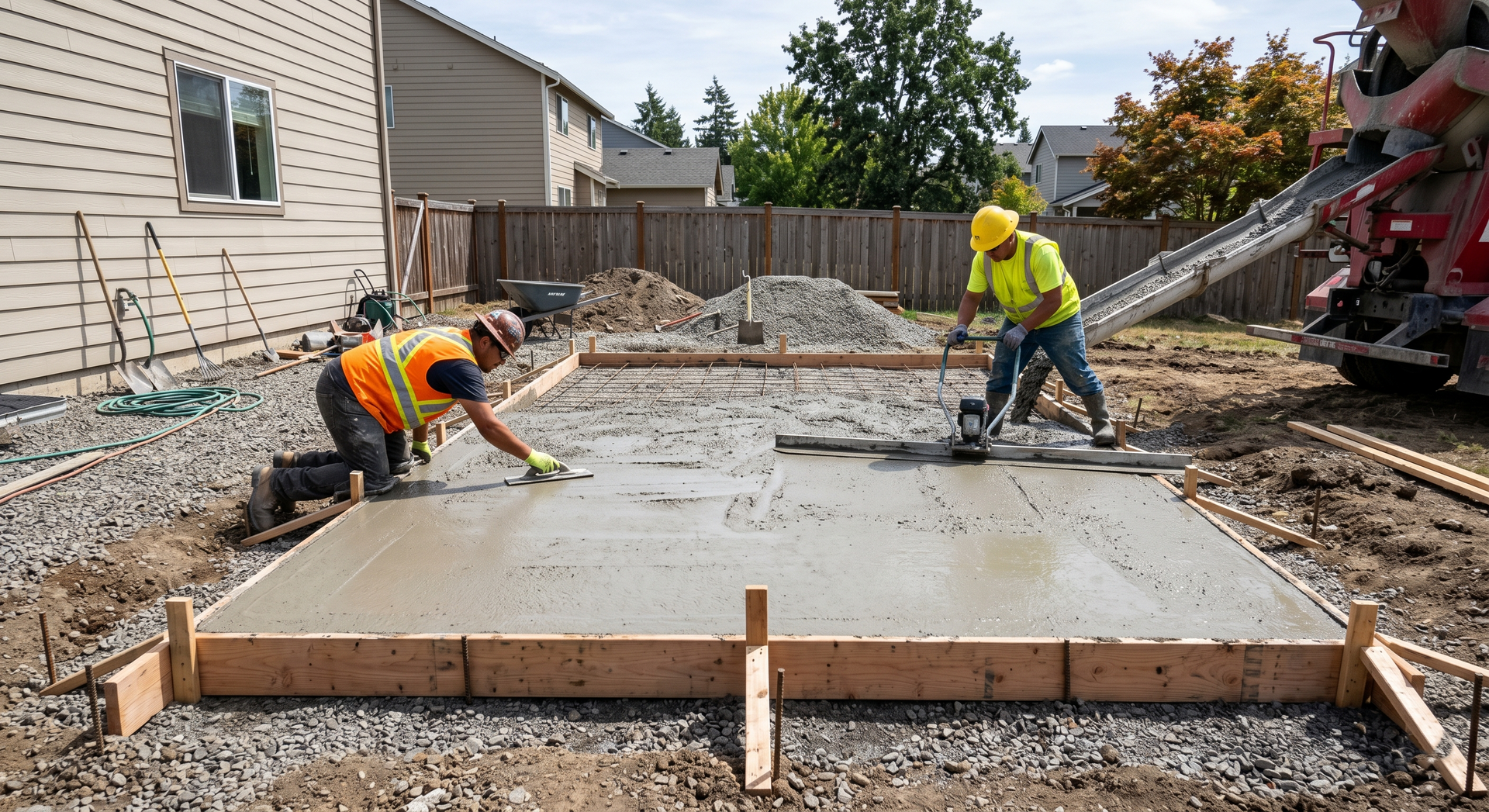
The Concrete Installation Process
At John Ciano & Son, we follow a proven installation process designed to ensure durability and long-term performance.
Step 1: Site Preparation
We remove vegetation, debris, roots, and unstable material.
The site is then graded for proper drainage and elevation.
Step 2: Base Installation
A compacted stone base provides stability beneath the slab.
This step is critical because the base supports the entire structure.
Step 3: Form Construction
Wood forms establish the slab dimensions and maintain proper thickness.
We carefully verify measurements before pouring.
Step 4: Reinforcement
Depending on the application, we install:
- Rebar
- Wire mesh
- Fiber reinforcement
These materials help minimize cracking and improve structural strength.
Step 5: Concrete Placement
Fresh concrete is poured and distributed evenly throughout the forms.
The surface is then:
- Leveled
- Floated
- Finished
- Textured if desired
Step 6: Curing
Proper curing allows the concrete to gain strength gradually.
This stage is just as important as the pour itself.
How Long Does Concrete Take to Cure?
Many people assume concrete is fully hardened after a day or two. In reality, curing is an ongoing process.
First 24–48 Hours
Light foot traffic may be allowed.
After 7 Days
The slab reaches approximately 70% of its final strength.
After 28 Days
Concrete achieves its full design strength.
For heavy equipment, vehicles, or structures, waiting for proper curing is essential.
Popular Upgrades and Customizations
Today's concrete pads can be customized to improve both appearance and performance.
Popular options include:
Decorative Finishes
- Broom finish
- Stamped concrete
- Exposed aggregate
- Colored concrete
Reinforcement Options
- Fiber mesh
- Rebar grids
- Wire reinforcement
Moisture Protection
- Vapor barriers
- Waterproofing systems
- Drainage enhancements
Heavy-Duty Applications
- Increased slab thickness
- Additional reinforcement
- Equipment anchoring systems
FAQs About Concrete Pads and Foundations
Do I need a permit?
Many municipalities require permits for structures larger than 100 square feet or projects involving utilities. We can help determine local requirements.
How thick should a concrete pad be?
Most residential pads are 4 inches thick, while garages, workshops, and hot tubs often require 6 inches or more.
Can concrete crack?
All concrete has the potential to crack. Proper reinforcement, control joints, and installation techniques help minimize cracking significantly.
Can I pour concrete in winter?
Yes, but special precautions must be taken. Cold-weather concrete placement often requires additives and additional curing protection.
How long will my concrete pad last?
A professionally installed concrete pad can last 30 years or more with proper maintenance.
Why Choose John Ciano & Son The Paving Authority?
Since 1945, we've built our reputation on quality workmanship, honest service, and long-lasting results.
Property owners throughout Union County choose us because we offer:
- Four generations of construction experience
- Licensed and insured crews
- Expert site preparation
- Knowledge of local building requirements
- Quality materials
- Competitive pricing
- Reliable scheduling
- Attention to detail on every project
We don't believe in shortcuts. Every foundation we build is designed to perform for decades.
Get a Free Estimate on Concrete Pads & Foundations
Whether you're planning a new shed, garage, patio structure, generator pad, or commercial installation, the foundation matters.
Let the experienced team at John Ciano & Son The Paving Authority help you build it right from the ground up.
Call today for a free consultation and estimate.
Phone: (908) 596-0515
Location: Elizabeth, NJ
Service Area: Union County & Surrounding Communities
Hours: Monday–Friday: 7:00 AM – 5:00 PM | Saturday: 7:00 AM – 12:00 PM