Top Mistakes Property Owners Make with Paving Projects
Paving Mistakes to Avoid

When it comes to asphalt paving and masonry work, mistakes don’t just impact how your property looks—they affect durability, drainage, and long-term maintenance costs. As fourth-generation paving professionals, John Ciano & Son The Paving Authority has seen it all across Union County, NJ: poor prep work, low-grade materials, shortcuts that cost thousands to fix later.
In this blog, we’ll walk you through the most common mistakes property owners make when planning paving or resurfacing work—and how to avoid them.
Mistake #1: Choosing the Cheapest Contractor
We get it—paving isn’t cheap. But choosing a contractor based solely on the lowest bid is one of the fastest ways to waste money.
Why?
- Low prices often mean cheap materials
- Inexperienced crews may skip essential prep steps
- Fly-by-night companies may disappear after the job
Always vet your contractor: Check for licensing, insurance, local reviews, and a detailed quote. A reputable company like ours provides clear communication, real references, and explains exactly what you're paying for.
Mistake #2: Ignoring Drainage & Grading
Water is asphalt’s worst enemy. If your paving project doesn’t include proper grading and drainage, you’re inviting future cracks, potholes, and pooling.
Bad drainage leads to:
- Standing water that weakens pavement
- Freeze-thaw damage in NJ winters
- Water flowing toward your foundation
Every paving project should begin with a drainage plan. At John Ciano & Son, we grade each surface carefully, build in slope, and install drainage features when needed.
Mistake #3: Skipping Base Prep or Using the Wrong Base
A driveway or parking lot is only as strong as what’s underneath it. Unfortunately, some contractors skip proper excavation or use inadequate base materials to save time and money.
You may not see the effects right away—but within a year or two, the surface may:
- Settle unevenly
- Develop large cracks
- Sink under vehicle weight
We always use compacted stone subbase with the correct depth for your vehicle load and soil type. Cutting corners here will guarantee future problems.
Mistake #4: Not Understanding the Difference Between Resurfacing and Replacement
A common misunderstanding: "Can’t you just add a new layer on top?"
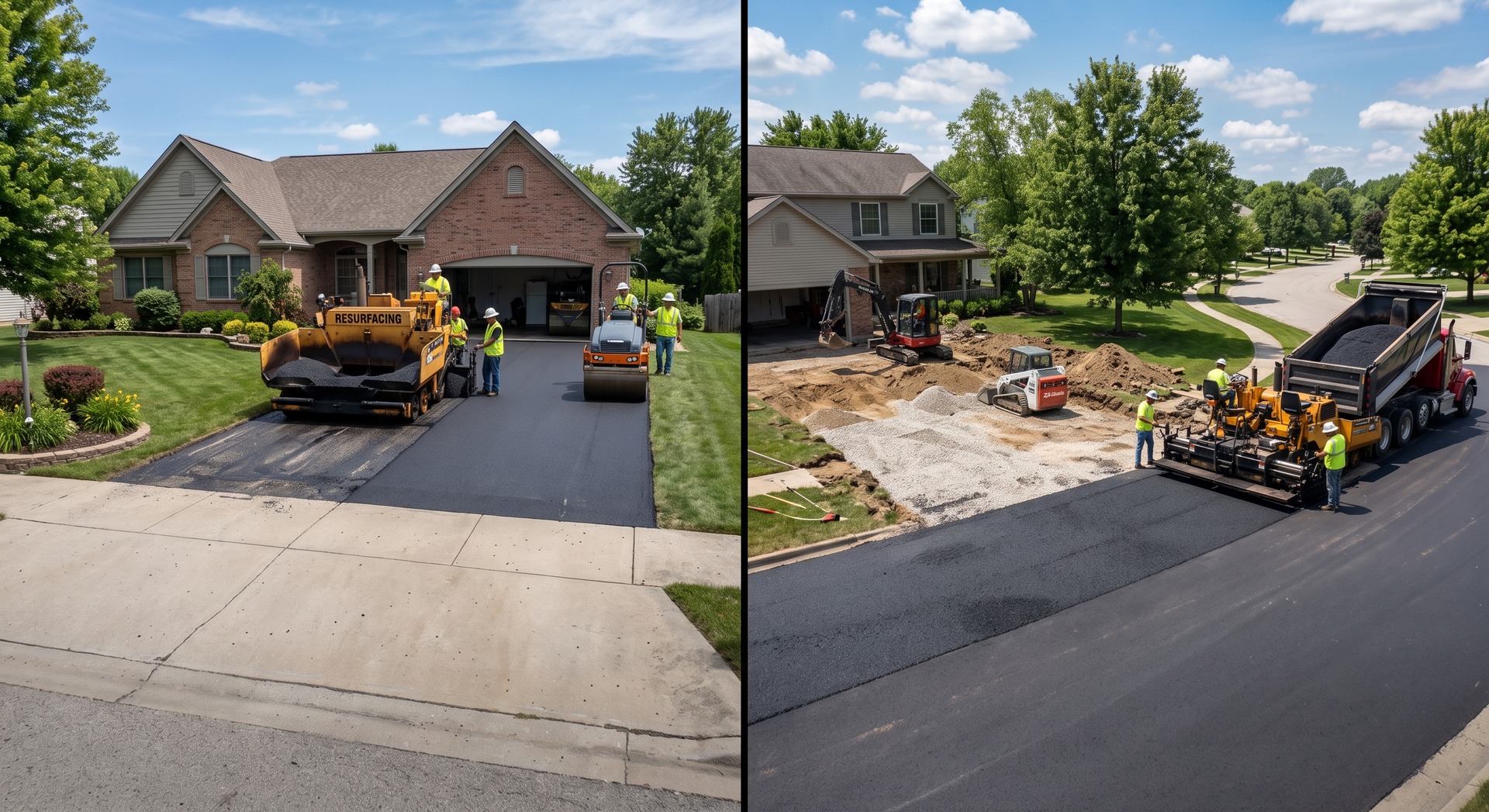
Resurfacing (overlay) can work—if the existing base is in good shape. But if there are deep cracks, potholes, or water issues, resurfacing may only mask the problem temporarily.
We help clients decide whether:
- A simple sealcoat is enough
- A mill and overlay makes sense
- A full rip-out and repave is needed
Making the right call here can mean the difference between a 5-year fix and a 25-year investment.
Mistake #5: Letting Maintenance Slide
Even high-quality asphalt needs care to perform its best. Sealcoating, crack filling, and occasional patching can extend the life of your surface by years—but too many property owners skip this step.
Without routine maintenance, you’ll face:
- Early aging from UV and weather exposure
- Water infiltration into the base
- Costly repairs or full replacements sooner than needed
We offer guidance on maintenance schedules, materials, and warning signs to look for.
Mistake #6: Not Considering Long-Term Use
Planning to park heavy trucks? Hosting a lot of foot traffic? Installing curbing or landscaping next year?
Paving should be planned with your full site usage in mind, not just today’s needs. Otherwise, you may:
- Undersize the base
- Miss opportunities to add curbing or drainage
- Have to rip up part of the surface for future changes
We take the time to ask these questions before we build.
Mistake #7: No Written Estimate or Scope of Work
Vague quotes lead to vague results. Before you sign anything, make sure you have a written estimate that includes:
- Square footage
- Base and asphalt thickness
- Material types
- Start and completion timeline
- Warranty terms
We provide clear, detailed estimates—no hidden fees or fine print.
Bonus Tip: Don’t Wait Until It’s Too Late
If you see signs of damage—like potholes, sinking spots, or recurring cracks—don’t wait. Timely repairs or resurfacing can often save the base and extend the lifespan of your asphalt.
Delaying may mean a full tear-out later.
FAQs – Paving Mistakes and Best Practices
How thick should my asphalt be?
For residential driveways, 2–3 inches of compacted asphalt is typical. Heavier traffic areas may need 4+ inches.
What’s the best time of year to pave in NJ?
Late spring through early fall is ideal. We avoid extreme heat or freezing conditions.
How can I tell if my base is still good?
We’ll inspect the surface, test for stability, and check for drainage issues before making a recommendation.
Work With Union County’s Trusted Paving Pros
At John Ciano & Son The Paving Authority, we’ve been fixing and preventing paving mistakes since 1945. Our team combines old-school craftsmanship with modern tools—and we never leave a job half done.
Whether you’re replacing a cracked driveway or paving a brand-new parking lot, we’ll walk you through every decision to make sure it’s built to last.
Schedule a Site Visit Today
Avoid the pitfalls. Get it done right the first time. Call our team today for a free estimate and expert guidance on your paving project.
📞 Call now: (908) 596-0515
📍 Serving: Elizabeth, NJ & Union County
🕒 Mon–Fri: 7 AM – 5 PM | Sat: 7 AM – 12 PM